

Consumer Electronics
Weight-Sensing Smart Shelves: IoT Inventory Tracking for Digit7
A load-cell-based smart shelf system accurate to 1g, running from room temperature to deep freezers — deployed across 50+ retail, warehouse, and pharmacy locations.
Client
Digit7 — a US-based leading tech company specializing in retail automation, focused on simplifying retail operations and maximizing ROI.
Problem Statement
Traditional inventory systems relying on cameras or IR tags were costly, inefficient, and required manual effort to keep accurate.
Solution
Techshlok developed a custom, cost-efficient IoT-based smart inventory system using high-precision weight sensors to track item removal and replacement, giving accurate real-time inventory data. Automated alerts notify store managers and vendors when stock reaches a preset reorder point, and the system was engineered to operate reliably across environments — from room temperature to cold storage and deep freezers.
System Architecture and Research
- High-precision load cells — measuring weight changes as small as 1g, for accurate tracking of product movement.
- Low-power microcontroller — selected to process weight data efficiently while maintaining 15+ days of battery life on a single charge.
- Wi-Fi connectivity — a reliable module for instant, real-time data transmission to servers.
- Power management — energy-saving sleep modes kept the microcontroller’s power consumption low without sacrificing performance.
Prototype Development
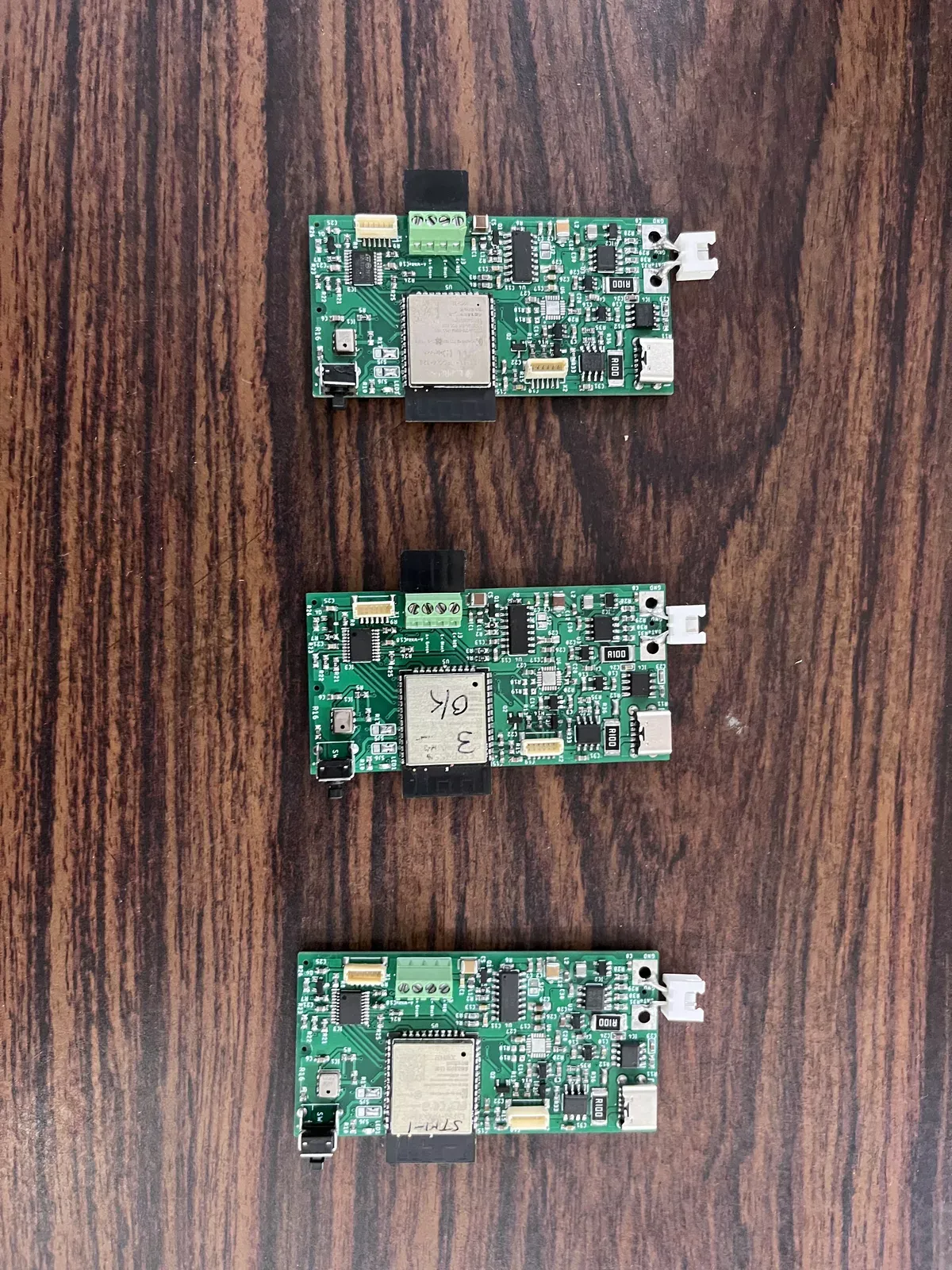
The initial prototype was completed within 20 days, including:
- Custom PCB design — integrating high-precision load sensors, a microcontroller, and a Wi-Fi module.
- Dual-controller power management — the primary controller drops into low-power mode while a secondary controller stays active, keeping weight monitoring and communication continuous.
- OTA firmware updates — all deployed devices can receive firmware updates simultaneously, keeping the fleet consistent and future-proof.
Testing and Iterations
- Accuracy testing — rigorous functional testing across a 1g–2kg weight range.
- Real-time updates — latency testing to ensure immediate alerts on item removal or replacement.
- Power consumption — validated against the client’s extended battery-life requirements.
Environmental Optimization
- Cold storage and freezer operation — devices were coated with a conformal layer to prevent condensation and ensure reliable performance in extreme cold.
- Humidity and heat resistance — tested in high-humidity and high-temperature conditions for robust operation across diverse environments.
Production and Deployment
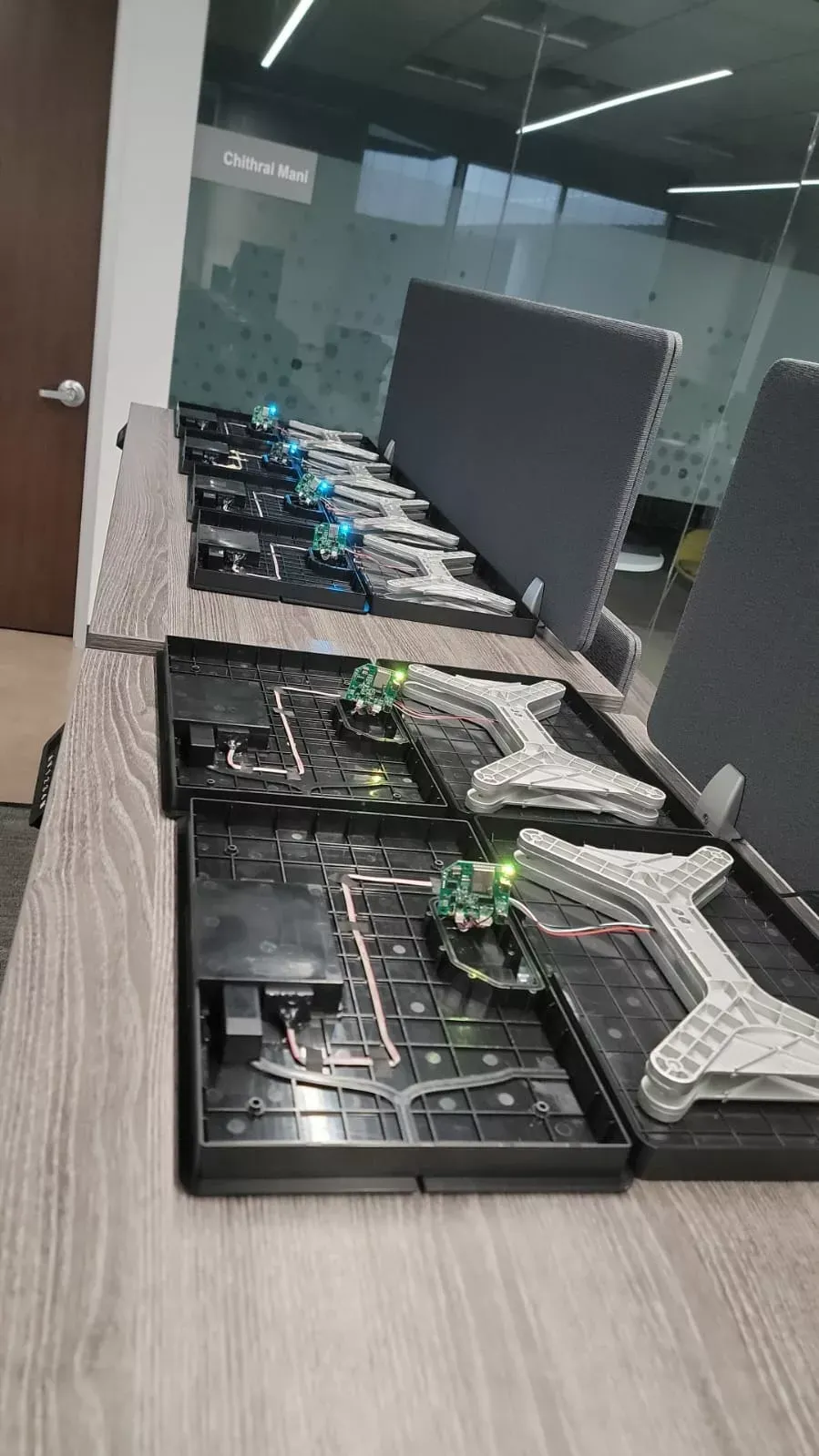
Once validated, the design moved to full-scale production, with PCBs manufactured overseas for cost efficiency, and a 3D enclosure engineered to protect the components and simplify installation.
Result
The IoT-based smart load cell system reshaped inventory management across global supermarkets, warehouses, and pharmacies — weight-based monitoring delivered real-time stock updates, reduced shrinkage, and streamlined operations, with automated alerts and stock tracking cutting down manual monitoring and data entry.
Business Value
- Cost savings — automated stock tracking reduced manual labor and operational expenses by 35%.
- Real-time inventory updates — improved stock accuracy and minimized shrinkage.
- Lower energy costs — the low-power design kept energy usage efficient.
- 50+ locations optimized — deployed globally across supermarkets, warehouses, and pharmacies without expensive infrastructure upgrades.