
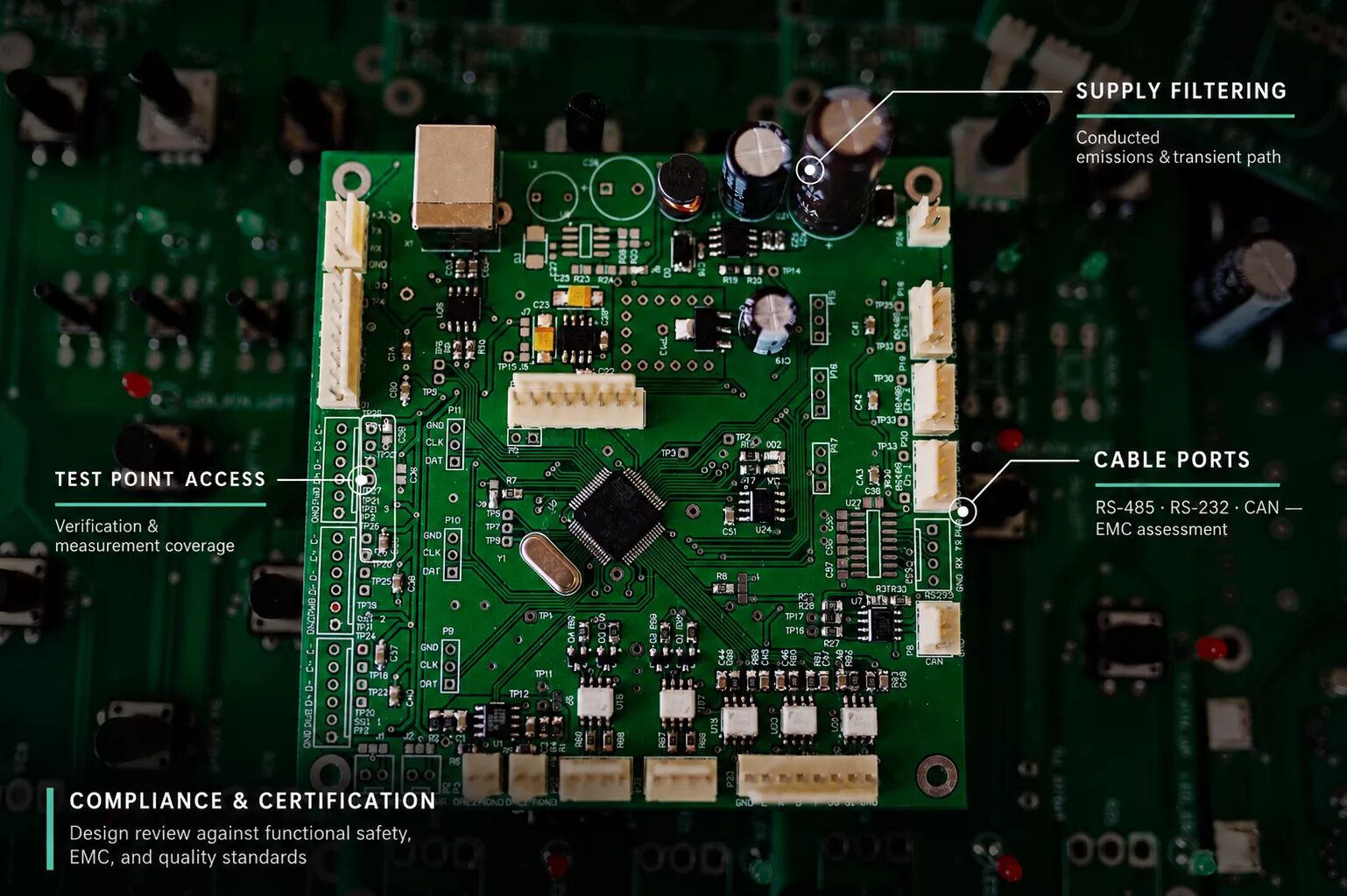
Compliance & Certification Consulting
Prevent certification failures, production scrap & field returns
When Hardware Teams Engage Verification & Validation
Hardware teams rarely come to V&V because "everything is fine." They engage when something critical is at risk:
- A certification lab flags EMI failures late in DVT
- Pilot units behave unpredictably in the field
- EVT boards pass in isolation but fail inside the enclosure
- Power rails collapse under real firmware load
- RF performance degrades once mechanical constraints are applied
- Early PVT builds show yield loss or intermittent failures
At this stage, delays are expensive — tooling is scheduled, components are procured, and production commitments are already in motion. Hardware Verification & Validation at Techshlok exists to stop these issues from becoming irreversible business failures.
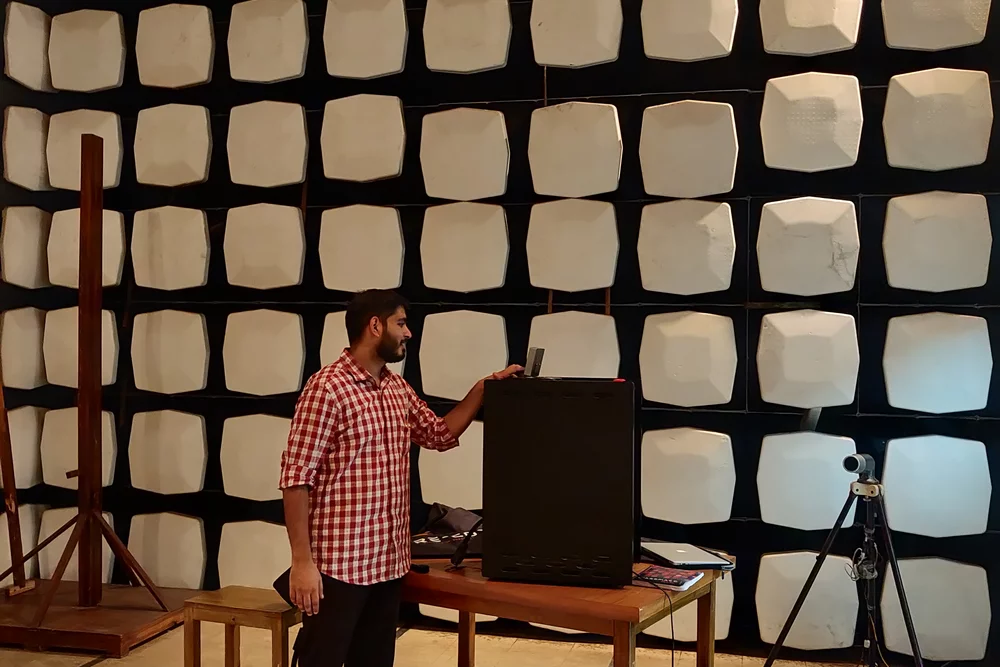
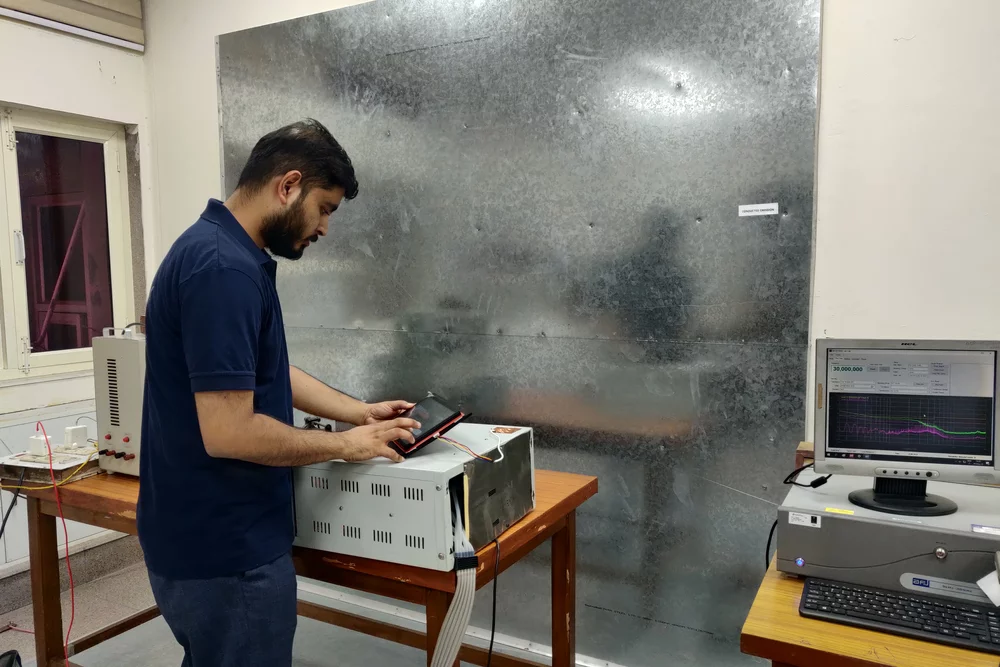
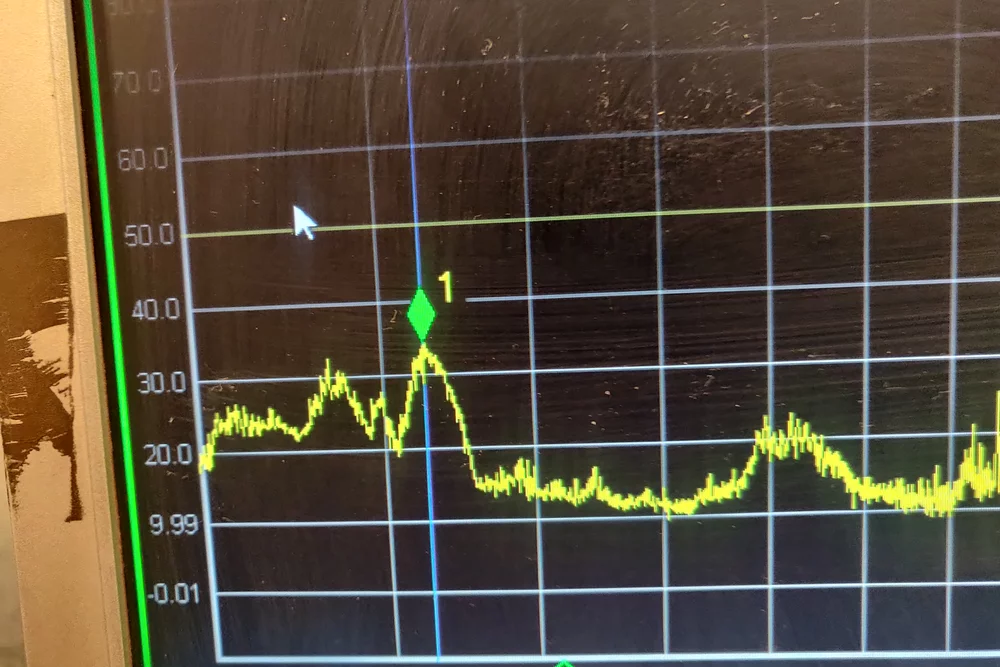
Running an EMC scan at ERTL(N)
What V&V Means in Practice
Verification & Validation is not QA, and it is not a certification lab. It's an engineering audit of reality — a structured process that independently measures whether hardware behaves as intended under real electrical, environmental, firmware, and regulatory conditions. V&V answers three questions that directly affect cost and risk:
Does the hardware truly meet its electrical and functional specifications?
Will it remain stable when integrated with firmware, mechanics, and real workloads?
Is it safe to proceed to certification, tooling, and production investment?
Independence matters when decisions affect certification outcomes and production investment. Our V&V team operates with a clear firewall from Hardware Design execution — measuring, challenging assumptions, and reporting objectively without bias toward design choices or schedules. This separation ensures:
- Failures are surfaced early, not rationalized
- Reports are audit-ready and defensible
- Decisions are driven by data, not optimism
Independence is what allows V&V to protect the business, not just the design.
Verification as a Risk Gate Across EVT, DVT & PVT
Verification requirements evolve as a product matures. We align V&V activities with EVT, DVT, and PVT milestones — each acting as a decision gate.
Is the Architecture Safe to Invest Further?
EVT verification focuses on validating core electrical assumptions — signal integrity, power behavior, clocking margins, and baseline firmware interaction. Findings determine whether it's safe to proceed with enclosure design, firmware scaling, and supply-chain commitments.
Is It Safe to Release Tooling and Enter Certification?
Hardware is validated under realistic conditions — enclosure effects, thermal behavior, EMI/EMC risk, power stability under load, and subsystem interaction. DVT gates tooling freeze, certification scheduling, and pilot deployment.
Will This Design Scale Without Scrap or Recalls?
PVT verification confirms readiness for manufacturing and scale — testing repeatability, production yield, and design-for-test assumptions, to prevent silent issues that only emerge once hundreds or thousands of units are built.
Specialized Verification Domains
Signal & Power Integrity Validation
We independently measure high-speed signal behavior, timing margins, and power stability to isolate issues that cause intermittent resets, data corruption, or performance collapse under load.
EMI / EMC Pre-Compliance & Troubleshooting
We identify emission and immunity risks early and isolate root causes before formal certification — reducing redesign cycles and schedule risk.
Environmental & Stress Validation
We expose hardware to temperature, humidity, power cycling, and mechanical stress conditions that commonly trigger latent field failures.
HALT / HASS & Reliability Testing
Accelerated stress methodologies uncover weaknesses that would otherwise appear months or years into deployment.
Hardware-in-the-Loop (HIL) & Automated Validation
Custom HIL systems validate real hardware behavior under real firmware workloads — across EVT, DVT, and PVT builds.
From Failure Detection to Engineering Feedback
Verification without remediation guidance is useless. When failures are identified, our role is to isolate root causes and provide actionable engineering feedback — not just measurements. Findings feed back into Hardware Design for layout, grounding, power, and component decisions, and into Embedded Firmware Systems for timing, fault handling, and interaction issues. This closed-loop approach ensures V&V strengthens the product rather than simply documenting its weaknesses.
Lab Infrastructure & Standards
Measurement, Not Assumptions
- High-bandwidth oscilloscopes and probes (Keysight / Tektronix class)
- Spectrum analyzers and near-field probes for EMI analysis
- Thermal chambers for environmental testing
- Custom HIL rigs for system-level validation
Audit-Ready Documentation
- ISO 9001-aligned V-model verification practices
- DVP&R (Design Verification Plan & Report) methodology
- IEC 61000 references for EMC
- ISO 16750 environmental guidelines where applicable
Where We Test and Certify
Pre-compliance EMI/EMC screening, conduction testing, radiation testing and ESD testing are done at ERTL(N).
Thermal chamber and vibration testing, along with ESD testing, are also done at CEERI, Jaipur.
Products for Indian clients are certified atERTL(N).
Products for USA and Europe clients are certified at BACL, China.
What This Approach Protects You From
Verification, in our approach, is business risk control through engineering evidence.
Who This Service Is For
If a failed build, delayed certification, or unstable product impacts revenue or reputation, this service exists to prevent that outcome.
Facing certification risk, unstable hardware behavior, or production uncertainty?
Request a Hardware Verification & Validation (V&V) Risk Review to identify root causes before tooling, certification, or scale-up.
Request a V&V Risk Review