
Hardware Engineering
Electronic hardware design for production-ready, compliance-aware products
Hardware Design as a Risk-Engineering Discipline
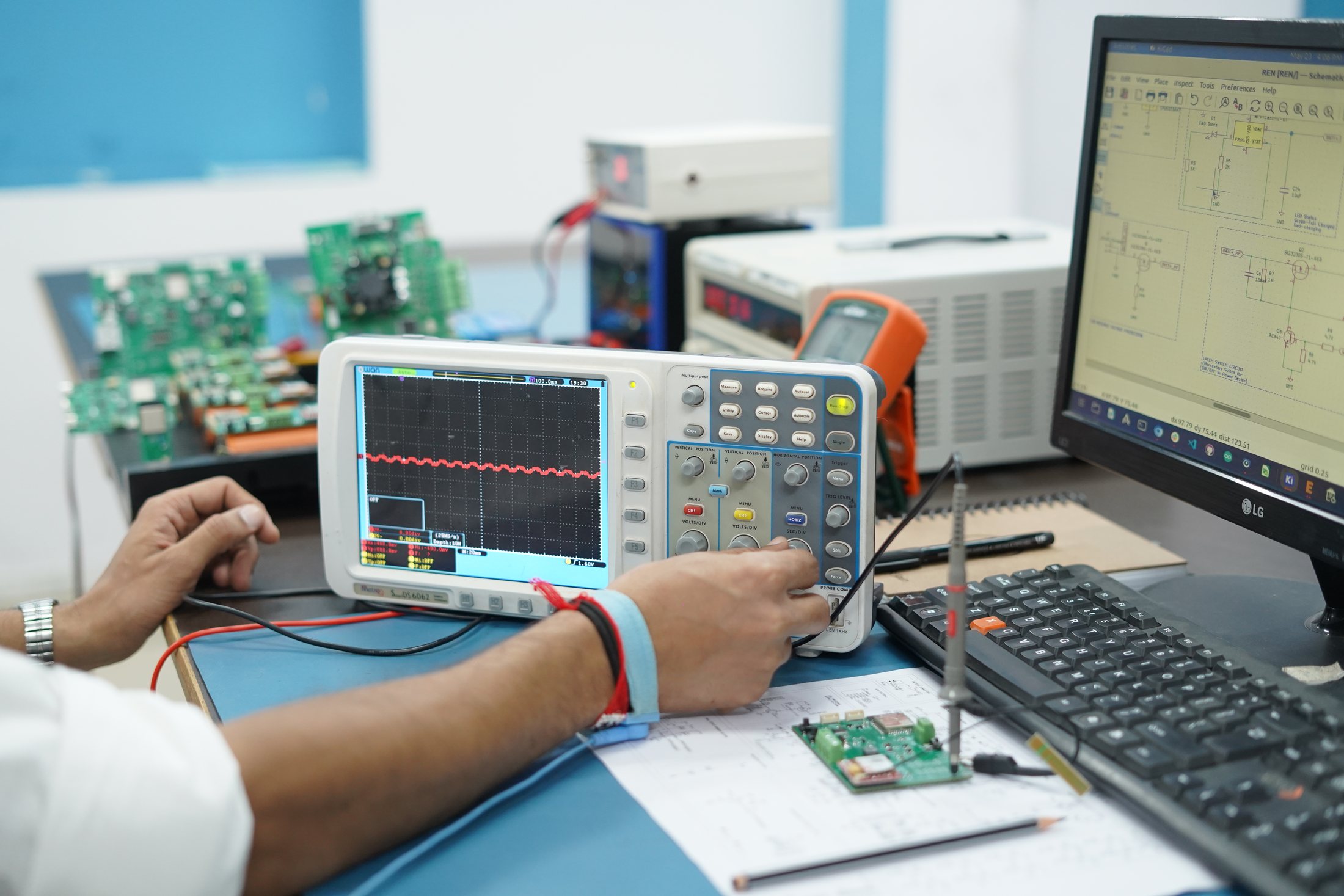
In modern electronic products, hardware design decisions determine far more than functionality. They define whether a product will pass compliance, survive field conditions, scale in manufacturing, and remain serviceable across component shortages and silicon revisions. At Techshlok, we treat hardware design as a risk-engineering discipline, not a schematic-delivery task.
We design electronic hardware systems that behave predictably under electrical noise, thermal stress, power variation, RF interference, and long-term deployment — and that transition cleanly from prototype to production without expensive redesign cycles.
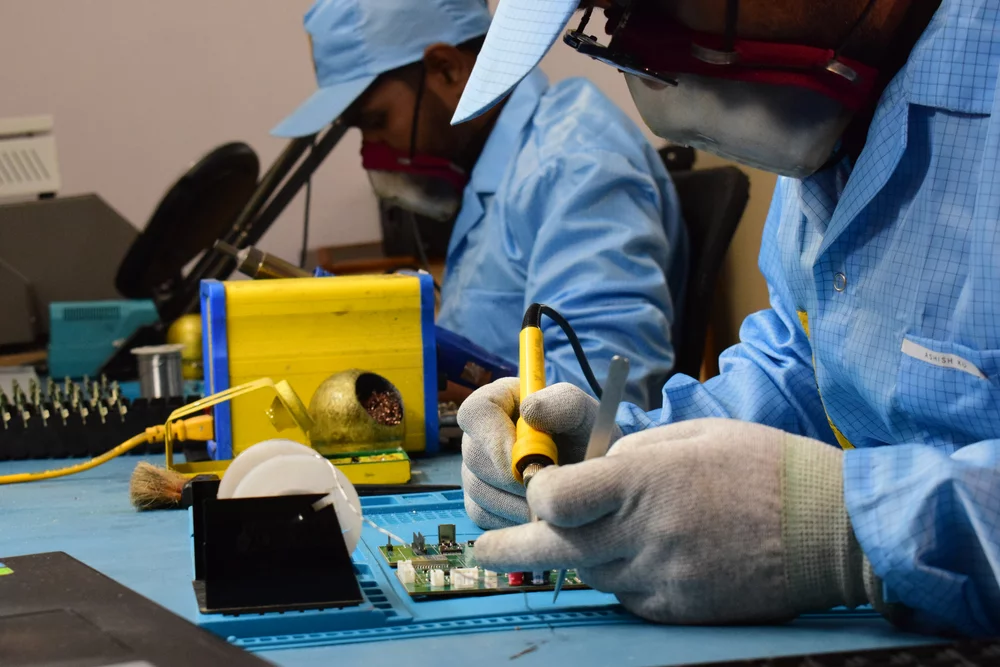
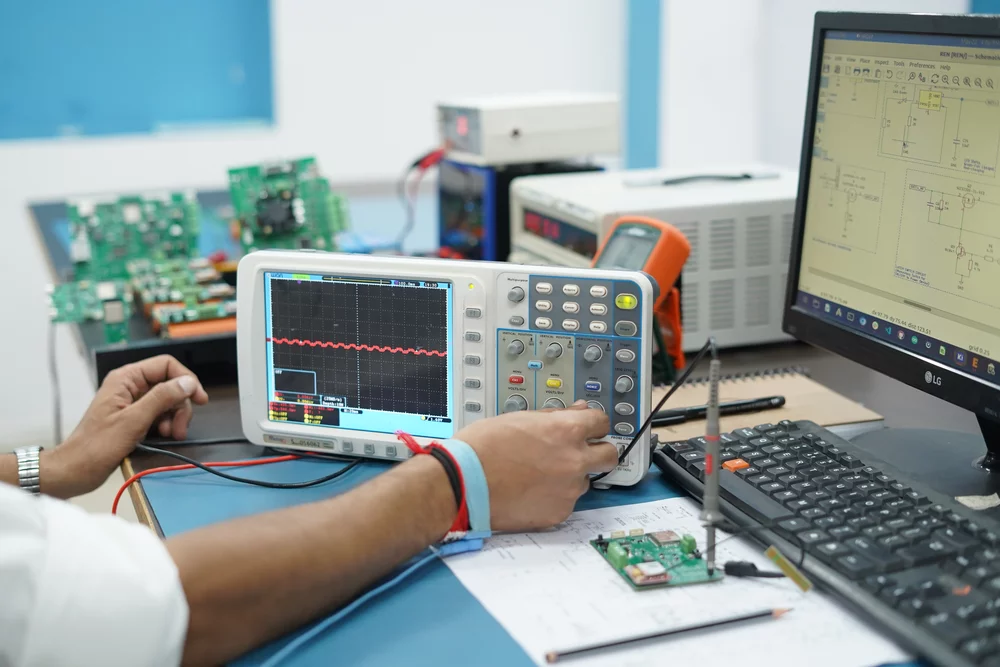
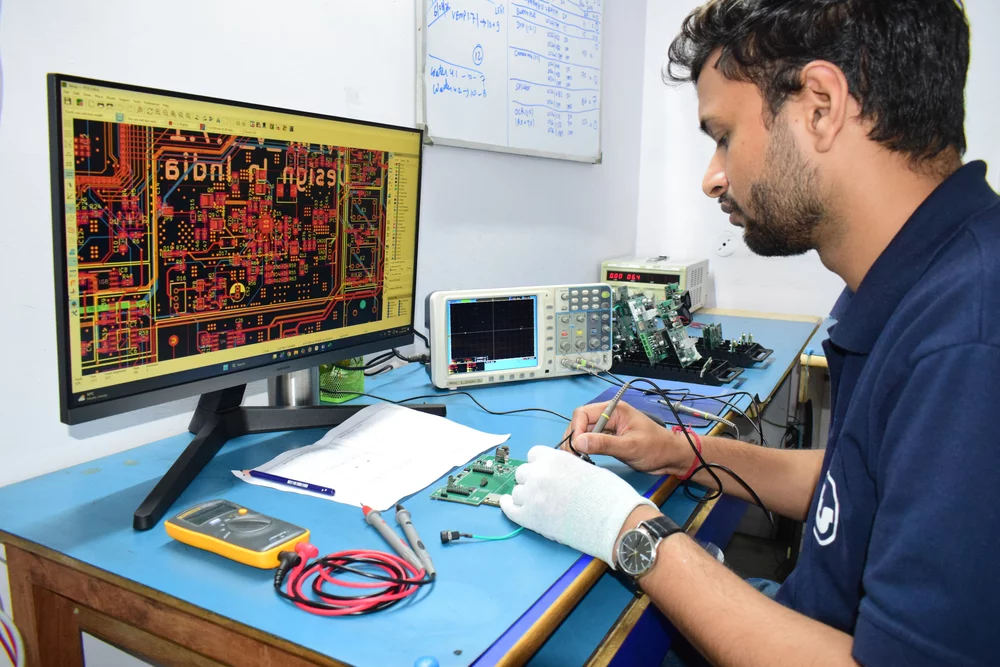
Hand-soldering in an ESD-safe environment
Our Core Design Capabilities
Digital Hardware Design
Microcontroller- and processor-based systems, high-speed interfaces, memory architectures, clocking, reset sequencing, and performance-critical digital design.
Analog Hardware Design
Precision analog circuits, sensor front-ends, signal conditioning, low-noise amplification, and measurement-grade systems.
RF & Wireless Hardware Design
Bluetooth, Wi-Fi, cellular, Sub-GHz, and LoRa hardware design, including RF front-ends, antenna selection, matching networks, and coexistence planning.
High-Speed & Multilayer PCB Design
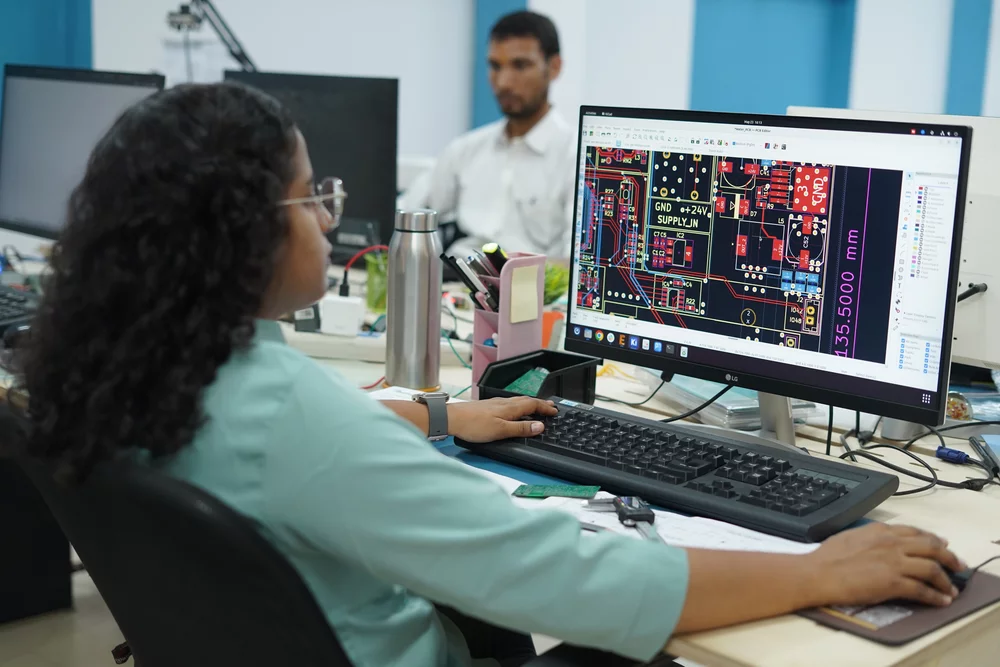
2–16 layer stack-ups, controlled impedance routing, SI/PI-aware layouts, EMC-conscious grounding, and thermal-aware PCB design.
Design for Compliance & Certification Readiness
Hardware architectures designed with CE, FCC, IEC, RoHS, and safety requirements in mind — reducing downstream certification risk. (Validation and testing are handled independently under our V&V services.)
The Techshlok 8-Gate Hardware Product Realization Framework
To prevent late-stage failures, we follow a gated, auditable framework that aligns design decisions with business and technical risk. Each gate acts as a decision checkpoint, not just a task list.
Requirements & IP Scoping
Electrical, environmental, regulatory, and IP constraints defined upfront.
System Architecture & Component Strategy
Block-level design with BOM optimization and multi-vendor sourcing.
Schematic Design & Simulation
Electrical validation of analog, power, and high-speed paths, including thermal considerations.
PCB Layout & DFM/DFx Review
Manufacturing-aware layout with early EMI/EMC risk mitigation.
Prototype Bring-Up & Functional Validation
First-article build, debug, and design verification readiness.
Compliance Readiness Review
Pre-compliance checks and documentation preparation before formal testing.
NPI & Production Pilot Support
Production test strategy and manufacturing handoff.
Sustained Production & Obsolescence Management
ECO handling, component lifecycle management, and long-term support.
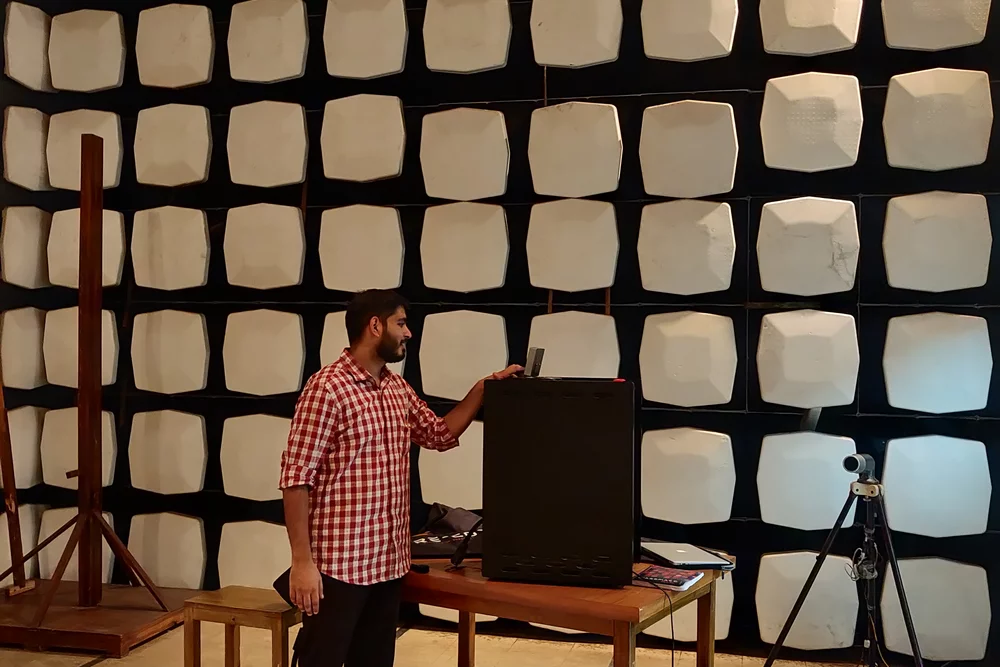
Pre-compliance screening runs at ERTL(N) and
 CEERI, Jaipur — see Compliance & Certification Consulting for how testing and certification fit into the gate framework.
Engineered for Certainty, Scaled for Growth
We tailor our engagement model and technical approach based on your company's stage, ensuring alignment with your primary goals:
Startups
Focused on speed to MVP & POC using fixed-scope projects, risk-adjusted component selection, and low non-recurring engineering (NRE) focus.
Midscale Companies
Prioritizing scaling, cost-down, and volume ramp-up through extensive design-for-manufacturing (DFM) optimization, supply chain resilience, and multi-vendor strategies.
Enterprises
Requiring high-reliability, security, and global compliance, using dedicated time & materials (T&M) teams, design for reliability (DFR), and advanced obsolescence management.
Why Techshlok for Hardware Design
Our value proposition is defined by solving the critical pain points that derail B2B hardware projects:
Hardware + Firmware Co-Design
We design hardware with full awareness of how firmware, bootloaders, RF stacks, and operating systems will interact with it — eliminating cross-domain surprises.
Architecture-First Engineering
We prioritize system architecture and failure prevention over rapid schematic delivery.
Designs Built for the Field, Not the Demo
Our hardware is engineered to withstand power variation, noise, RF interference, and long-term deployment.
Clear Documentation & Auditability
Every design is delivered with structured documentation suitable for scale-up, certification, and long-term maintenance.
Lifecycle-Aware Decision Making
From BOM selection to thermal margins, we design with production, serviceability, and obsolescence in mind.
Prototype to Small-Batch Assembly
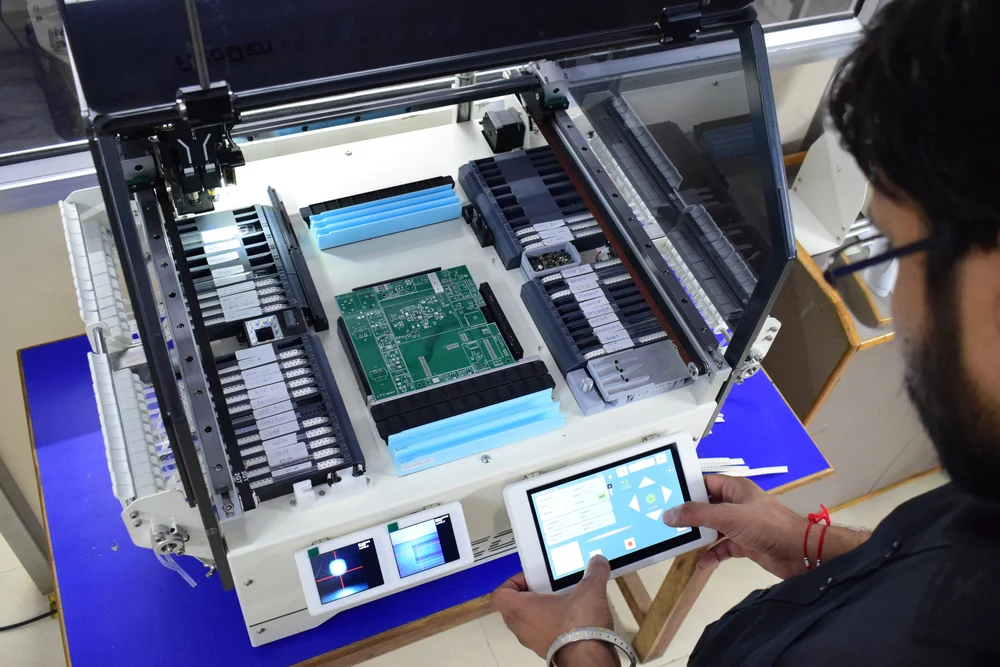
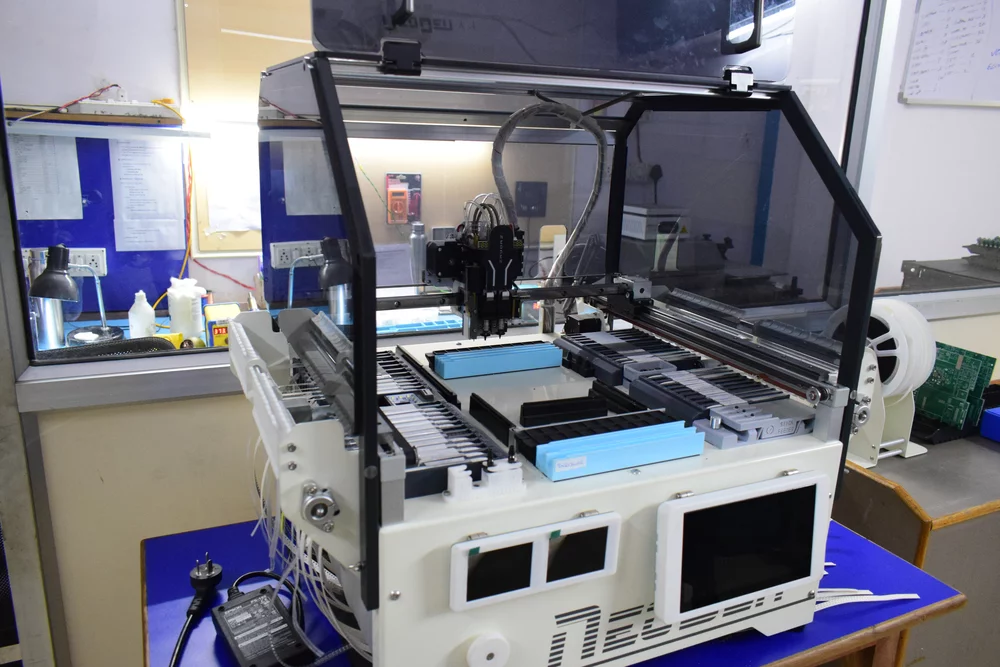
In-house proto assembly capability — roughly 200–500 PCB capacity, run by a dedicated 5-person team — so a validated prototype doesn't need to hand off to a separate manufacturing vendor to move into small-batch production.
We treat hardware design as a risk-engineering discipline, not a schematic-delivery task.
Problems like yours, solved and deployed
See this applied in practice:

Automotive
Auditing and rebuilding a client's OBD fleet-data prototype into a thermally protected, RTOS-driven production device — now running across 500+ trucks.
Read the case study →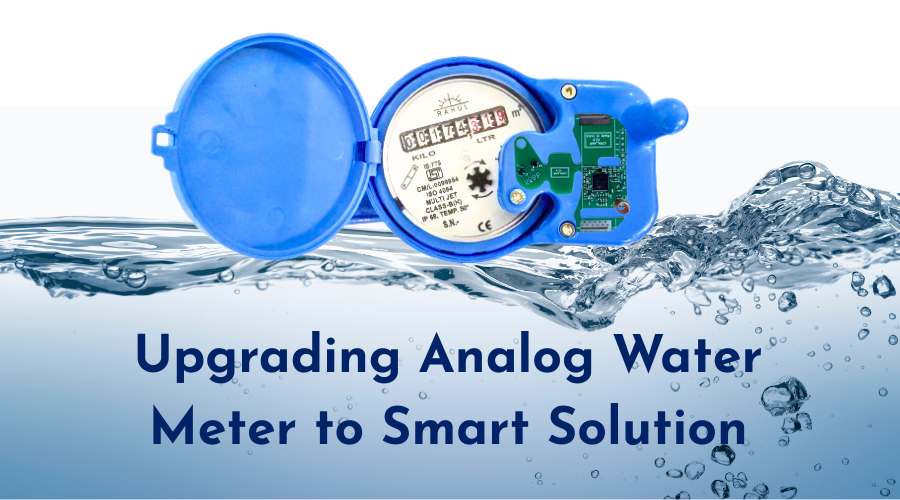
Consumer Electronics
Engineering a 10+ year battery-life smart metering ecosystem — from a single RF prototype to city-wide LoRaWAN deployment with 99%+ read accuracy.
Read the case study →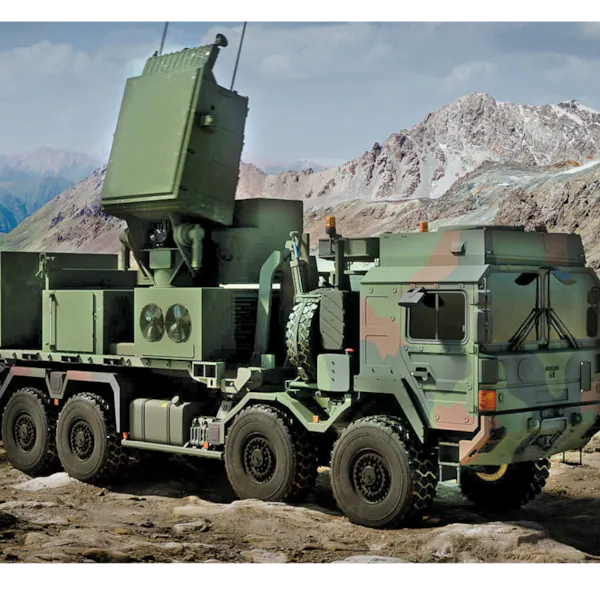
Defence
An IoT sensor package with AR-assisted remote verification, built to catch antenna misalignment before it degrades telecom connectivity.
Read the case study →