

Extended Engineering Teams
Extend Your Embedded Engineering Capacity
Embedded Programs Rarely Slow Down Because of Headcount
Most embedded programs lose time somewhere specific. A board bring-up with no clear owner. A certification cycle waiting on lab access. A firmware backlog that grows every sprint because no one has the bandwidth to own it end to end.
Adding headcount alone does not resolve this. An engineer without shared architecture context, lab access, or working knowledge of your development standards creates coordination overhead before creating output. The first three months are spent building the conditions for the work rather than doing it.
Techshlok extends engineering capacity as a working unit — already equipped, already operating to embedded development practice — so it contributes to your roadmap in days rather than quarters.

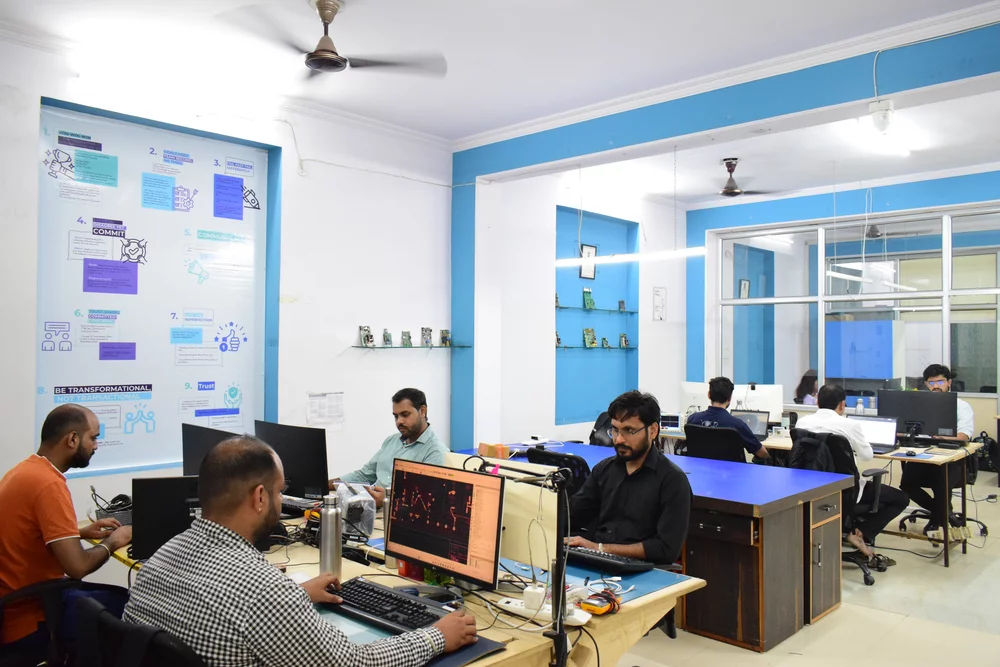

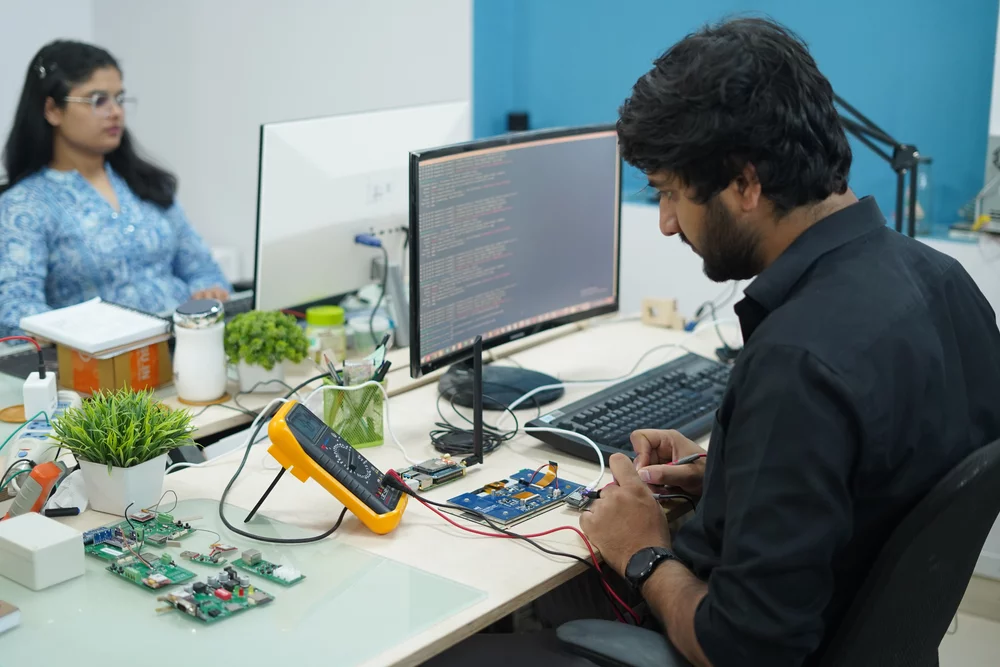
Reviewing a system architecture diagram together
Engineering Capacity, Not a Staffing Model
Shared Architecture, Not Isolated Tasks
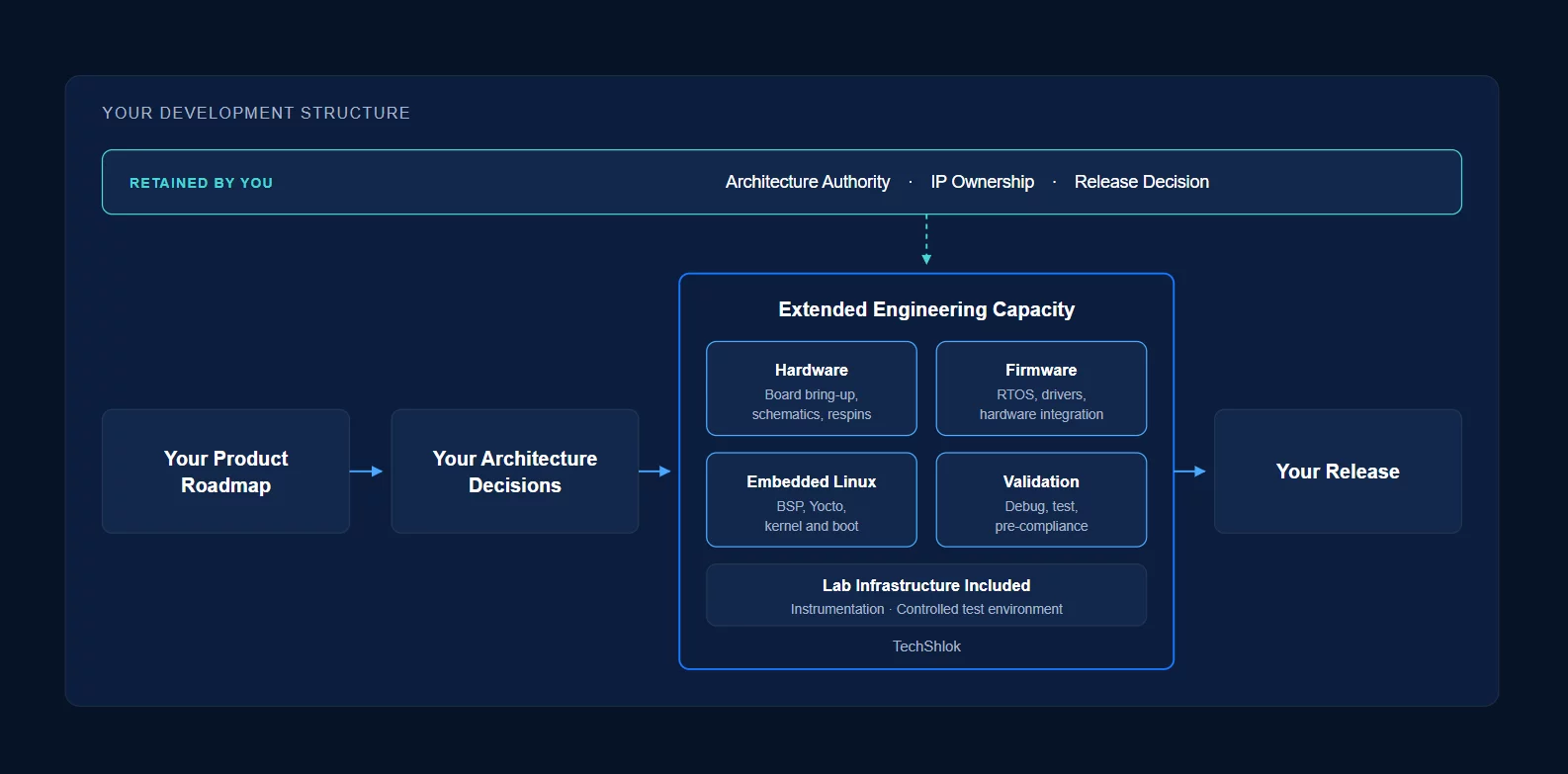
Engineers work inside your product architecture and design decisions. They participate in technical reviews, understand why the system is built the way it is, and carry that context forward — rather than executing detached tickets against a specification they had no part in shaping.
Lab-Backed, Not Remote-Only
Hardware bring-up, protocol debugging, power and signal validation, and pre-compliance testing run from Techshlok's equipped lab. Your program gets access to instrumentation and controlled test conditions without capital investment or procurement lead time.
Ownership Stays With You
Every schematic, firmware build, test result and document belongs to your organization under NDA, from the first day of the engagement. There is no ambiguity about IP, and no third-party exposure of your designs.
Two Ways to Extend Capacity
Embedded Specialist Extension
One or two engineers — hardware, firmware, or embedded Linux — integrated directly into your existing team and sprint cycle. Suited to programs where your architecture and process are already established, and the constraint is depth in a specific discipline.
Extended Product Team
A small cross-functional unit spanning hardware, firmware and validation, taking ownership of a defined subsystem or milestone, coordinated by a Techshlok engineering lead. Suited to programs where an entire piece of the product needs an owner rather than an assistant.
Both models scale with the program. Capacity adjusts as development phases intensify and again as a release stabilises.
How Extended Capacity Fits Into Your Development Structure
Extended capacity is not a separate workstream that reports in at milestones. It operates within your roadmap, your architecture decisions and your release cycle. The engineering is distributed; the ownership is not.
Engineering Discipline, Not Just Additional Hands
Capacity is only useful when it arrives with the practices that make embedded work reliable.
Every engineer joining your program operates under the same engineering discipline Techshlok applies to its own product development: documented design reviews before implementation, version-controlled firmware with traceable change history, structured validation with recorded results, and NDA-governed handling of all design material.
Where your program requires alignment to specific standards or compliance frameworks, we work within them rather than around them. Engineers adapt to your review gates, your documentation requirements and your test evidence expectations — not the reverse.
This is the difference between capacity that reduces engineering risk and capacity that redistributes it.
How Integration Works
Scope
Define the technical scope, the specialisation required — hardware, firmware, RTOS, embedded Linux, wireless and protocol work — the expected engagement length, and how the work connects to your existing roadmap.
Align
Techshlok proposes engineers matched to that scope, with relevant project background. You run your own technical evaluation in whatever form suits your team: architecture discussion, debugging scenarios, design review.
Integrate
Engineers onboard into your repositories, toolchains and communication channels. Lab access and test setup are provisioned in parallel, so bring-up work is not waiting on infrastructure.
Deliver
Engineers operate inside your sprint cycle or milestone plan, with regular technical syncs and full visibility into progress through your tracking system.
Start With a Scoped Pilot
For new engagements, we recommend beginning with a defined pilot — a bounded piece of real work from your actual backlog, not an evaluation exercise.
A pilot validates the things that matter before a longer commitment: technical depth against your specific problem, communication under your team's working rhythm, and quality of delivered output. It produces usable work regardless of what you decide afterwards.
If the fit is right, the engagement continues without a restart. If it is not, you have lost a defined, bounded amount of time rather than a hiring cycle.
Where This Fits
Extended engineering capacity is suited to organisations that are:
If embedded stability affects your certification schedule, production timeline or field reliability, this model is built for that pressure.
Common Questions
Frequently Asked Questions
1How is this different from outsourcing or contract staffing?
How is this different from outsourcing or contract staffing?
Engineers work inside your architecture and your engineering standards rather than as a detached delivery pool. All IP and deliverables remain yours under NDA. Work runs through Techshlok's own engineering process — design review, version control, structured validation — rather than being handed off and returned.
2How quickly can capacity be added?
How quickly can capacity be added?
Onboarding begins once scope is agreed and engineers are aligned. Because engineers come from an existing embedded team with lab access already in place, ramp-up is measured in days rather than the three to six months a direct hire typically requires.
3Who owns the IP and work product?
Who owns the IP and work product?
Your organisation does. Schematics, firmware, test results and documentation belong to you under NDA from day one. Nothing is shared with third parties, and all work is performed in a controlled environment.
4What does a pilot engagement involve?
What does a pilot engagement involve?
A scoped, bounded piece of real work drawn from your backlog, used to confirm technical fit and delivery quality before a longer-term engagement. The output is yours either way.
5Can the engagement scale up or down?
Can the engagement scale up or down?
Yes. Engagement size adjusts with the program — from a single specialist during a stable phase to a cross-functional unit through an intensive development or validation period.
6What happens when the engagement ends?
What happens when the engagement ends?
Knowledge transfer is planned rather than improvised. Documentation, repositories, test evidence and design rationale are handed over to your internal team, and continued support can be arranged separately if the product requires it.
Discuss What You're Building
Tell us where the program is constrained — a subsystem without an owner, a validation cycle without lab access, a firmware backlog outgrowing the team — and we will propose the engineering capacity that fits it.