Consumer Electronics
From Analog to Smart: A City-Scale LoRaWAN Metering System for Rahul Meters
Engineering a 10+ year battery-life smart metering ecosystem that took Rahul Meters from a single RF prototype to city-wide LoRaWAN deployment with 99%+ read accuracy.
Client
Rahul Meters is a well-established manufacturer specializing in analog water meters. As the market shifted toward smart metering, Rahul Meters sought to innovate and remain competitive by integrating advanced technologies into their existing products.
Problem Statement
The primary challenge was modernizing traditional analog water meters to meet growing demand for smart, connected devices — without a solution that integrated seamlessly into existing meters, without significantly increasing cost or compromising battery life.
Solution
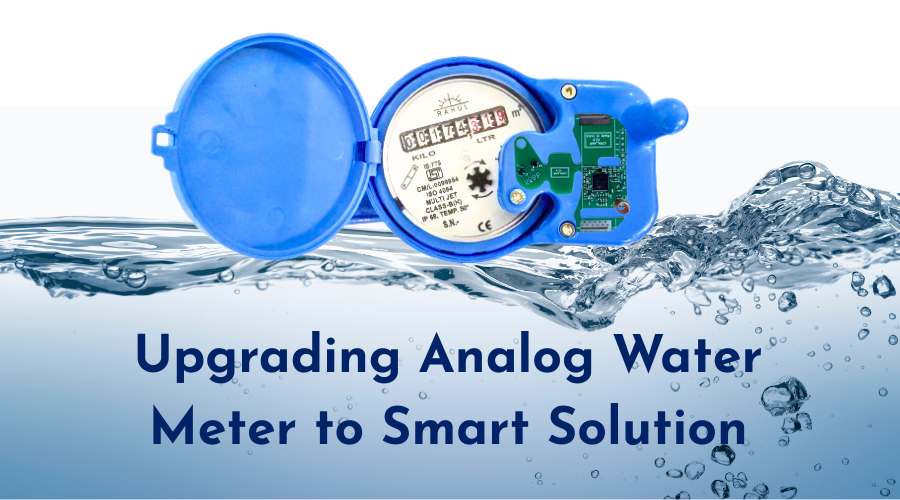
Techshlok developed a comprehensive solution by integrating LoRa technology into the existing water meters. The team designed a custom PCB with LoRa communication capabilities, enabling meters to send data wirelessly once a day while preserving long battery life. Advanced power management techniques and component selection achieved over 10 years of battery operation.
The solution evolved over two major design cycles:
- Version 1 — a custom RF-based handheld and meter device ecosystem.
- Version 2 — a full-fledged LoRaWAN-powered smart metering infrastructure, optimized for large-scale deployment.
Version 1: RF-Based Handheld AMR System
System Architecture Overview
Version 1 consisted of two primary components:
- RF Water Meter Unit — a battery-powered unit with a sensor interface and an RF-enabled MCU, with a projected operational lifespan of 5+ years.
- Handheld Unit (HHU) — a mobile device capable of wirelessly reading meter data, storing it locally, and transferring it via USB, controlled via Bluetooth with an Android app.
Development Process: Phase-Wise Execution
Phase 1: POC and Initial Prototype
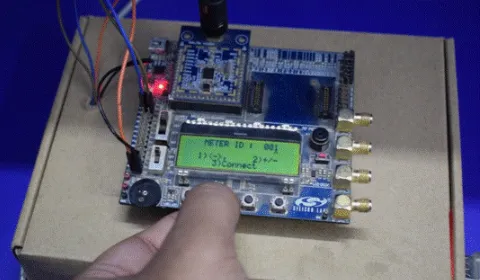
- RF Platform Selection — an 868 MHz RF platform using an industry-grade Si1062 RF MCU for long-range, low-power communication.
- PCB Design — a custom compact RF PCB, fabricated and manually soldered, verified using RF signal analyzers.
- Sensor Integration — an optical sensor aligned with the mechanical spinning wheel inside the utility meters to capture real-time consumption data.
- Enclosure Design — custom 3D-printed enclosures made the PCBs dustproof, waterproof, and durable.
Phase 2: Optimization for Field Operations
- Power Management — initial testing revealed high battery consumption from always-on operation. A cyclic wake-sleep mechanism using the Si1062’s internal RTC enabled periodic wake-ups to transmit data, significantly improving battery longevity.
- Mobile Application Development — the HHU, originally a button-operated LCD interface, was upgraded to operate over Bluetooth via an Android app, making it more user-friendly and compact.
- Memory and Communication — the HHU was equipped with 8GB onboard memory and USB data export.
Phase 3: Field Testing and Final Refinement
- Field Trials — extensive testing at client sites demonstrated a reliable communication range of 150–250 meters in real-world scenarios.
- Circuit Protection — prolonged-usage failures were traced to sensor interface instability; protection circuits for the input lines resolved the issue permanently.
- Mass Manufacturing — after successful validation, PCBs for both HHU and meter units were delivered for large-scale production.
Version 2: LoRaWAN-Based Scalable Smart Metering Ecosystem
Background and Motivation
Following the success of the RF-based system, the client sought to scale deployment nationwide. The global chip shortage affected availability of the Si1062 platform — at the same time, LoRa (Long Range) technology emerged as a viable alternative with superior coverage, lower power demands, and open protocol support.
Designing a Full-Stack LoRa Ecosystem
Phase 1: Device Architecture
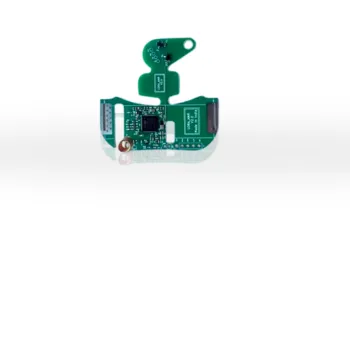
- LoRa-Compatible Microcontroller — transitioned to an STM32 wireless MCU with native LoRa support.
- IM858 Modulation Protocol — used for optimal range, low data rate, and enhanced robustness on the 868 MHz ISM band.
- Supercapacitor Power Buffer — integrated for energy spike handling and short-duration backup.
- RF Tuning — performed using spectrum analyzers to maximize signal fidelity and validate long-range communication.
Phase 2: Gateway Development
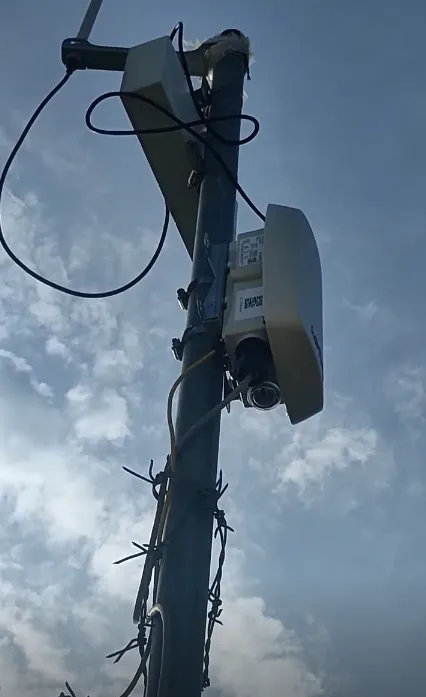
- Rockchip RK3566 — a cost-effective SoC selected to build a custom LoRaWAN gateway PCB.
- Semtech LoRa Shield — enabled RF transmission and reception.
- Power and Connectivity — gateways were powered via PoE and connected to the cloud using 4G SIM cards.
Phase 3: Server and Backend Stack
- LoRaWAN Network Server — built in-house to handle message routing using the MQTT protocol.
- Application Layer — a PHP-based web application for device provisioning, real-time monitoring, and user-level analytics.
- Database and Geo-tagging — support added for geo-location-based device management and data retrieval.
Phase 4: LoRa Repeater Deployment
After installing 400 devices, engineers identified black zones where meter data wasn’t reaching the central server despite power availability — the issue stemmed from poor 4G coverage, which prevented gateway communication.
A newly introduced LoRa repeater technology was adopted: repeaters captured device signals and relayed them to nearby gateways without requiring a SIM or internet connection. As a result, gateway costs were reduced by over 50%, and previously unreachable areas became part of the network.
Business Value & Impact
- Accuracy Boosted — over 99% accurate readings in real-world conditions.
- Operational Efficiency — manpower needs for field data collection reduced by over 80%.
- Battery Life Optimized — device life extended to 10+ years with minimal maintenance.
- Scalability Proven — enabled the client to scale from pilot to city-wide deployment, unlocking government partnerships and utility contracts.
- Infrastructure Cost Reduced — the LoRa repeater innovation led to over 50% savings in gateway hardware investment.