Consumer Electronics
Grove: Engineering a Touchless Breathing Tree for Google's California Campus
Sensor-fusion electronics for a large-scale interactive art installation — detecting a visitor's breath rate without contact, using thermal and RGB camera fusion, for artist Shilo Shiv Suleman's Grove at Google HQ.
Client
Google, commissioning an interactive art installation for its California headquarters in collaboration with artist Shilo Shiv Suleman.
Problem Statement
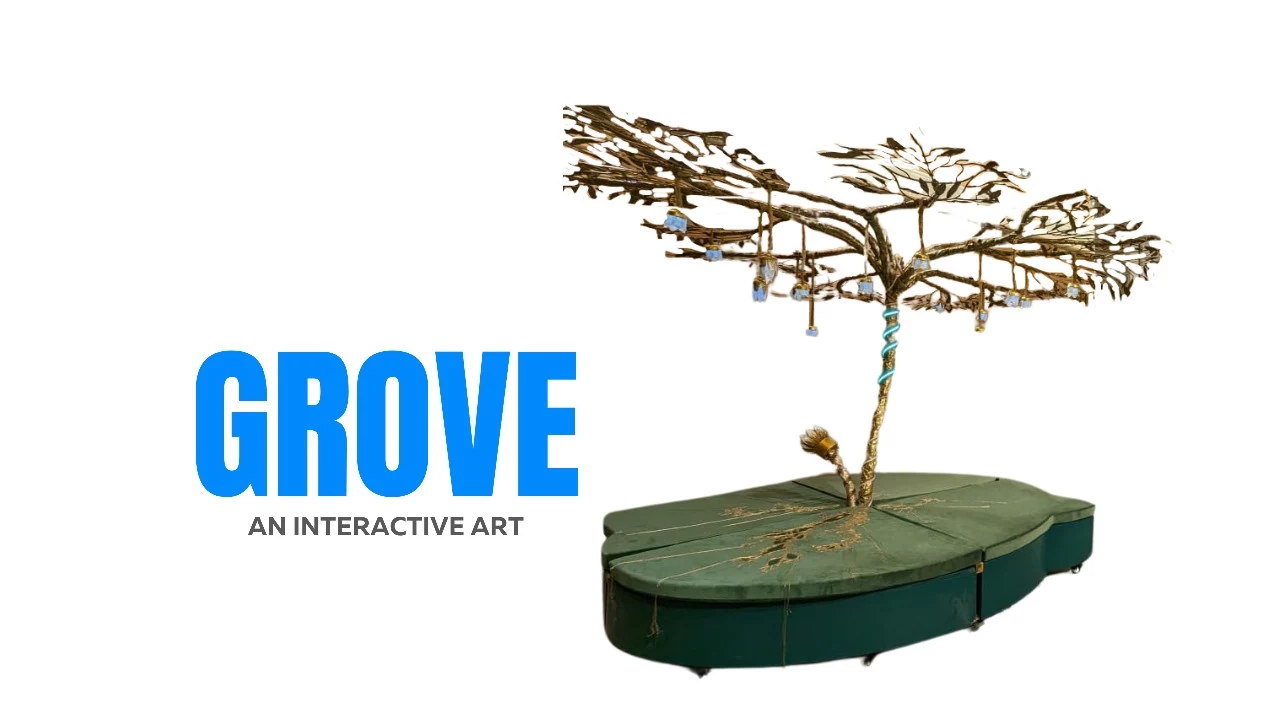
Suleman’s vision was a sculptural tree, wrapped in LEDs, that breathes in response to the person sitting beneath it. Techshlok’s task was to design and build the electronics and interactive mechanisms that made that vision physically work — including a way to sense a visitor’s breath rate that the installation could respond to in real time.
Solution
Techshlok designed a sensor-fusion system to measure breath rate remotely, without any physical contact, and used it to drive the tree’s flowers and stem so they visibly respond to the person beneath them.
Approach
Dividing the system into manageable parts
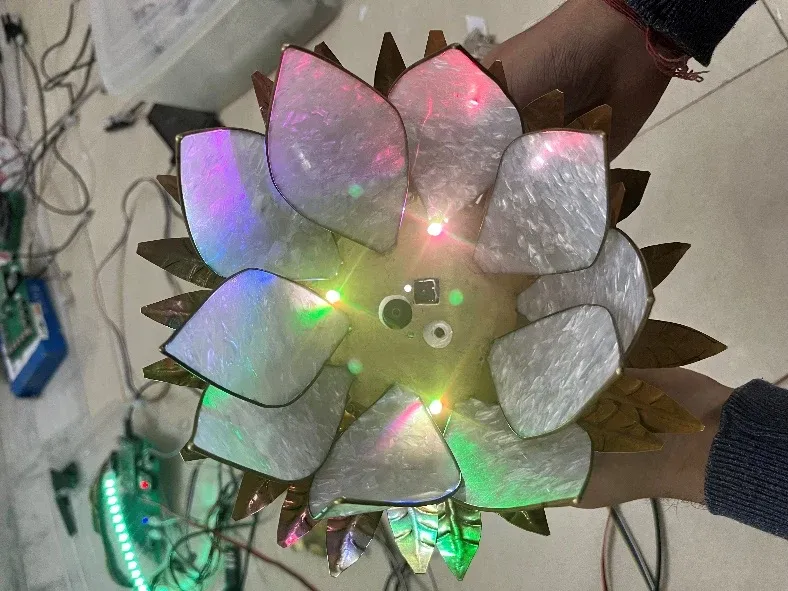
The project was split into smaller, independently workable pieces — power supply, breath-rate detection, LED drivers, and installation planning for a build that a layman could later replicate and maintain.
Handling the unknowns
The hardest open question was how to detect breath rate at all. Because of COVID-19, asking a visitor to touch anything for detection wasn’t an option. The team researched and landed on a dual-camera approach — RGB plus thermal — using the thermal camera to pick up the warm air exhaled from the nose, focused on the area just below the nostrils. A microphone-based approach for detecting breath sound was also explored, but ruled out as infeasible under Google’s installation guidelines.
Testing
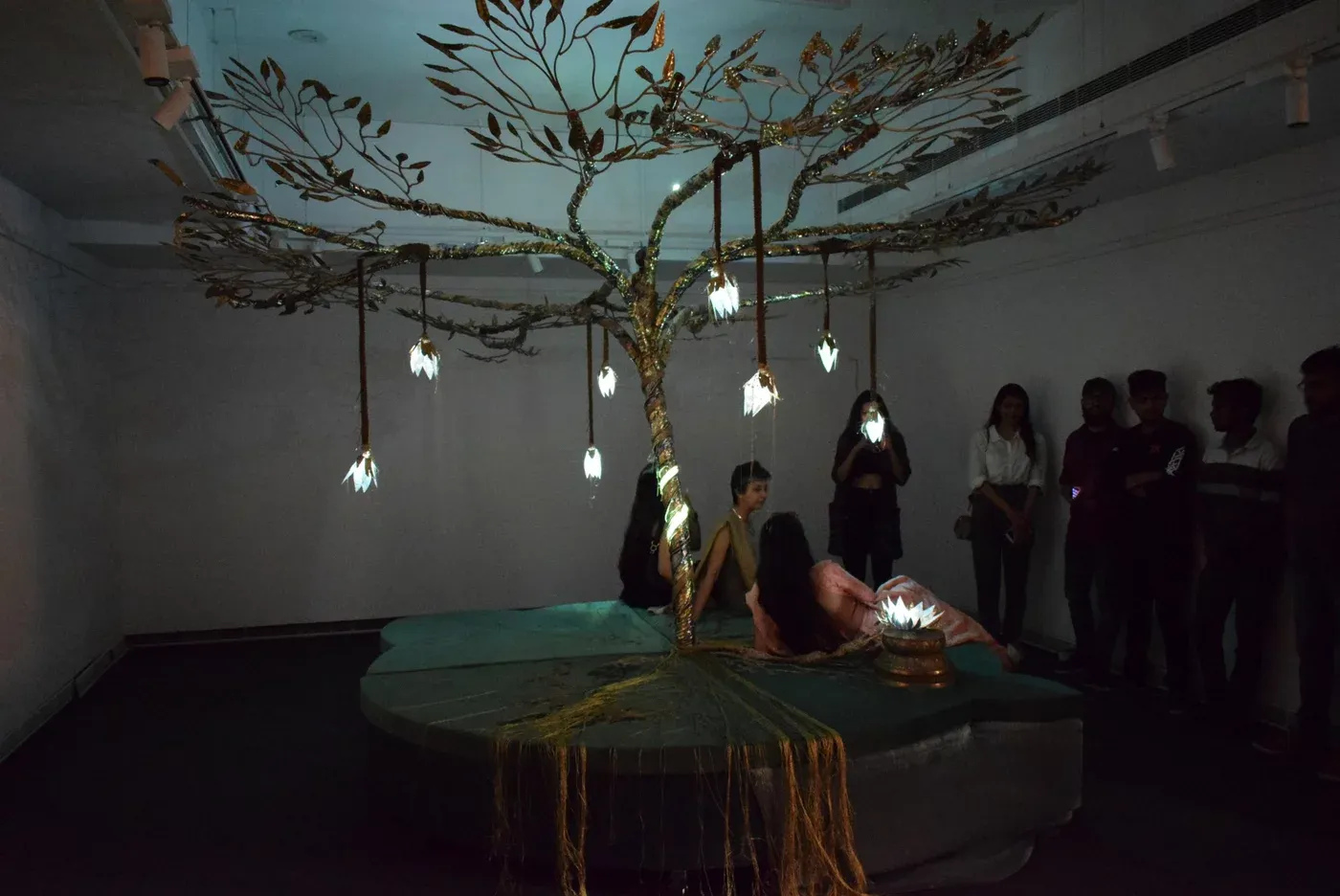
The prototype went through roughly six months of testing, including a public installation at Jawahar Kala Kendra, a local art centre in Jaipur, to see how it performed across different people, settings, and breathing patterns. The system was designed for modularity throughout, so any failed component could be swapped without taking the whole installation offline.
Result
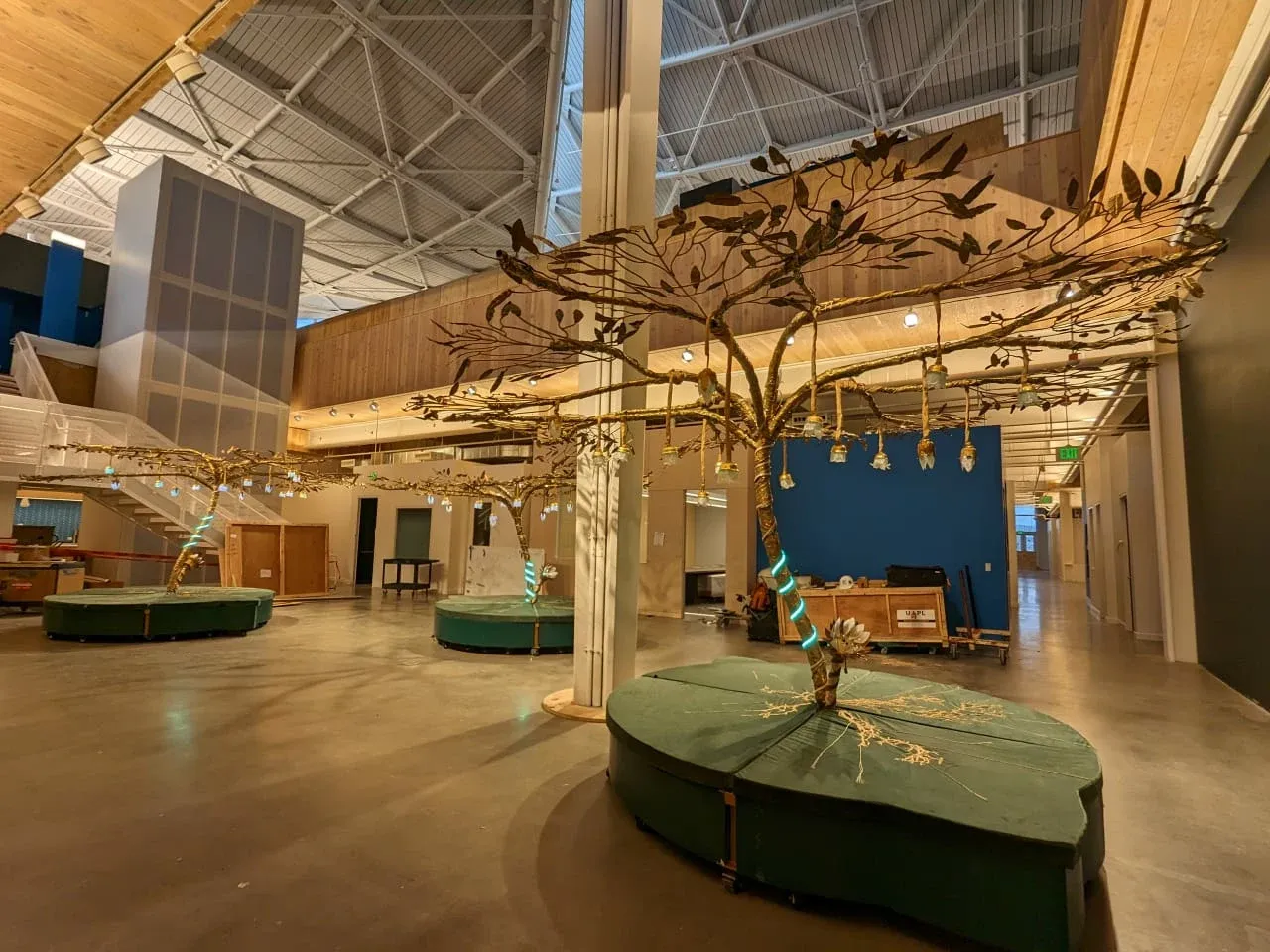
The interactive art installation was completed within the agreed timeframe, meeting expectations for both functionality and aesthetics. Techshlok delivered the full project — design through deployment — in 9 months, on time and within budget, with the client expressing satisfaction with both the development process and the finished installation.