Automotive
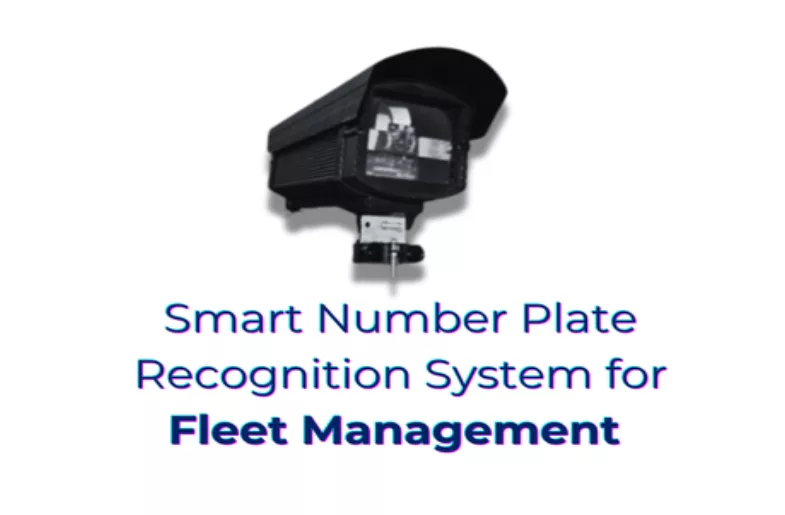
Automating Vehicle Entry and Exit With a Smart Number Plate Recognition System
A Raspberry Pi-based number plate recognition device for Gaadizo's service centers, cutting manual record-keeping errors by 50% and lifting daily vehicle handling capacity by 30%.
Client
Gaadizo — a leading car service and maintenance enterprise.
Problem Statement
Gaadizo faced challenges managing vehicle inflow and outflow at their service centers. The manual process of recording vehicle details — number plates, entry time, exit time — was prone to errors, time-consuming, and led to inconsistencies in customer service records, which in turn affected billing accuracy and customer satisfaction.
The client needed a fully automated, remotely controllable solution to detect vehicle entry and exit, capture number plate details and timestamps, store the data securely on a centralized server, and enable real-time updates through the service lifecycle.
Solution
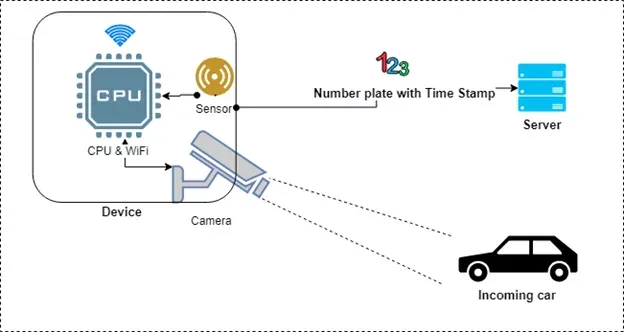
Techshlok’s engineering team developed a Number Plate Recognition System built on Raspberry Pi, sensor technology, and IoT protocols, executed in phases to keep precision aligned with the client’s objectives.
Requirement Analysis
Techshlok held in-depth discussions with Gaadizo to capture the core pain points and functional requirements, mapping out the device’s key features: number plate recognition, timestamp logging, remote operability, and integration with the client’s existing service management tools.
Prototyping and Proof of Concept
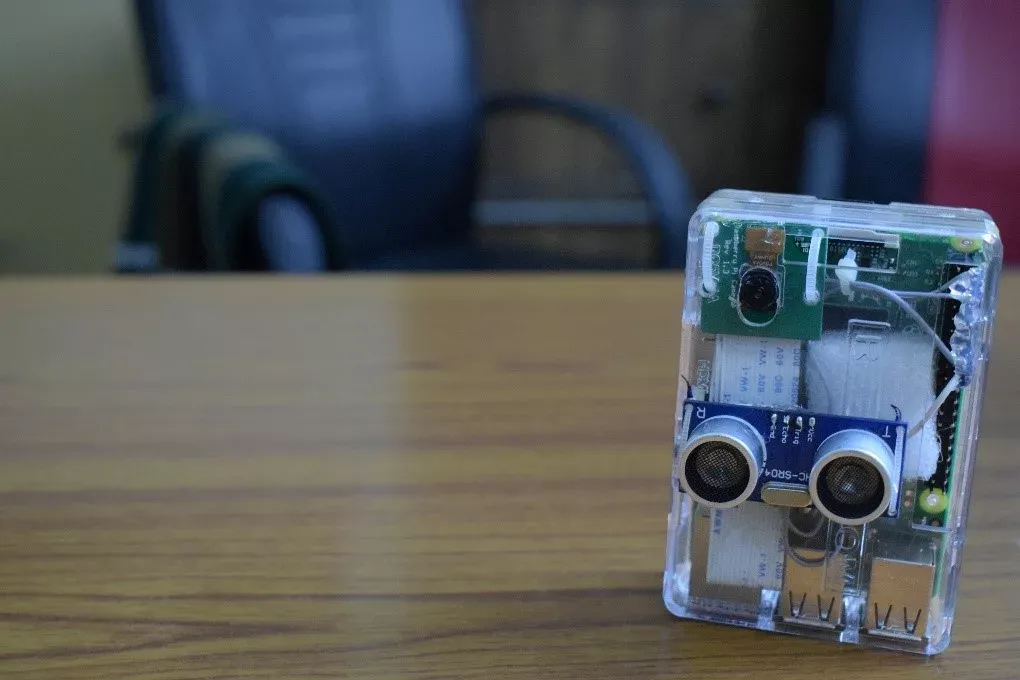
An initial prototype used ultrasonic sensors and a 5-megapixel camera, tested in a controlled environment to validate vehicle detection and data logging.
Refinements and Iterations
Based on real-time testing at Gaadizo’s service center, the team transitioned from ultrasonic to IR sensors for faster, more accurate detection; introduced a 5-second video-recording capture mechanism to eliminate missed frames; and replaced SMTP with MQTT for reliable communication, transferring data to an FTP server over SFTP.

Final Development
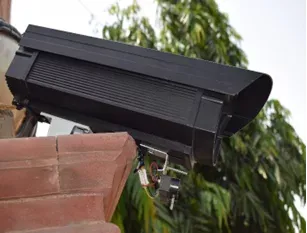
The components were integrated into a dustproof, durable casing for long-term use, with remote monitoring and control enabled via a mobile app for operational flexibility.
Technical Specifications
- Processor — ARM Cortex-based Raspberry Pi running Raspbian OS.
- Sensors — infrared (IR) sensors for precise vehicle detection (1–5 metre range).
- Camera — 5-megapixel camera for high-resolution image/video capture.
- Communication — MQTT for device-to-server communication, SFTP for secure data uploads.
- Power — 230V AC with an extendable cable for easy installation.
- Casing — dustproof, shock-resistant plastic for industrial environments.
Result
- Operational efficiency — the automated system eliminated manual errors and inconsistencies in vehicle records, reducing human dependency and saving time and labor costs.
- Enhanced customer experience — customers received real-time updates on service progress, with a streamlined billing process for faster, hassle-free transactions.
- Scalability and control — remote operability allowed easy scaling across multiple service centers, with a modular design supporting future upgrades.
Business Value
- 30% increase in daily vehicle handling capacity.
- 50% reduction in manual record-keeping errors.
- Enhanced brand reputation from an improved customer experience.